


Scoolinary: Cook Online
4.87.00 Reviews
App Specs
- Version
- 1.1.2
- Updated On
- License
- Free
- Downloads
- 50,000+
- Developer
- Scoolinary
- Categories
- Food & Drink
- Platform
- Android, iOS
Screenshots

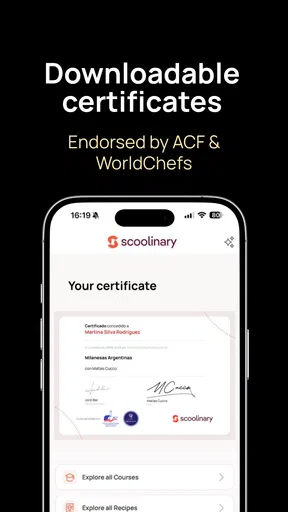
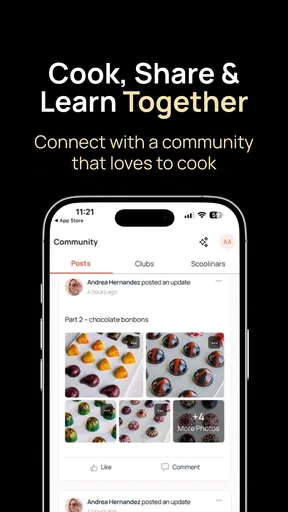
 Analysis by AppCompare
Have you ever dreamed of mastering the art of cooking from the comfort of your own kitchen? Well, let me tell you about my latest digital culinary adventure with the app Scoolinary: Cook Online. This app is like having a personal cooking school right in your pocket, and I’ve been cooking up a storm ever since I downloaded it. So, grab a cup of coffee, and let’s dive into the features and overall experience of this app.
For me, the key question is not just whether a cooking lesson looks appealing, but whether I can follow it comfortably while planning, learning and actually making dinner. Scoolinary is a food-and-drink learning app from Scoolinary, built around video-led instruction and recipes. It is free to install, though some in-app items cost money, so I would treat the download as a way to explore rather than assume every course is included. Its 4.8 average from around 665 ratings suggests that many users are pleased with it, but the small number of written reviews means I would still judge the experience against my own cooking habits.
Getting Started with Scoolinary
First things first, downloading Scoolinary: Cook Online was a breeze. Available on both Android and iOS, it took just a few taps, and boom, I was ready to explore the culinary world. As soon as I opened the app, I was greeted by a sleek and user-friendly interface. The navigation is intuitive, which is perfect for someone like me who tends to get lost in complex menus.
That clear first impression matters when I’m choosing a lesson with one hand while the other is busy with groceries or a chopping board. The current version is 1.0.9.6, and the app is listed for Android devices running version 7.0 or later. Its Everyone age rating makes it broadly suitable as an app, although the actual cooking tasks still need ordinary kitchen supervision for children. I would also separate the free installation from the course commitment: before building a learning plan around paid material, check which lessons are available to you and what an individual purchase involves.
Readability and finding a lesson
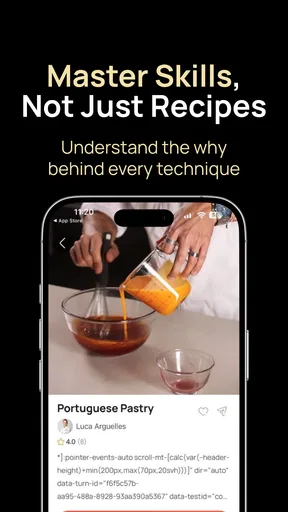
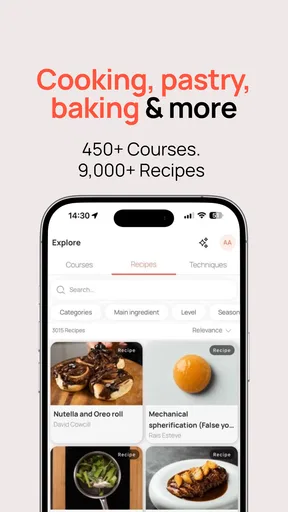
The app offers an impressive range of cooking courses, and I mean impressive. From basic knife skills to intricate dessert techniques, there's something for every skill level. I decided to start with a beginner course called "Perfect Pasta", because who doesn’t love pasta, right? The course was broken down into easy-to-follow video lessons, complete with step-by-step instructions. The instructors are professional chefs, and their passion for cooking is contagious.
In practical use, the course-and-lesson structure is more helpful than an unfiltered stream of recipe ideas. I can choose a subject, work through its parts, and return to the relevant lesson rather than trying to reconstruct a technique from a page of notes. That suits someone who wants to improve one repeatable skill, such as getting a pasta dough to the right feel, more than someone who only wants a quick list of weeknight meal suggestions. If your first priority is finding a recipe by the exact ingredients already in your fridge, a conventional recipe search app may get you to dinner faster.
One feature I particularly loved was the ability to bookmark lessons. This way, I could easily return to specific techniques or recipes without having to search through the entire course. Plus, the app allows you to download lessons for offline viewing, which is a game-changer for those of us with spotty Wi-Fi.
Worth Reading Before You Choose

Flipboard Shows What News Apps Must Do Beyond the Feed

Switching to Android Auto Means Rethinking Your Driving Routine

Google Calendar Makes a Crowded Week Easier to Manage

Ludo King Makes the Most of the Minutes Between Plans

Baby Panda World Brings Quick Play to Modern Phones, but Its Game Library Feels Busy

ESPN’s Live Game View Makes Following Close Games Easier
Those two tools work especially well together: I can save a useful technique while browsing, then download it before heading somewhere with unreliable reception. A small but useful habit is to bookmark the precise lesson I expect to use, not merely the course; when hands are messy, fewer searches mean less interruption. Offline viewing is also a sensible option when cooking in a room where the connection is weak. I would still prepare ingredients and read through the steps before starting, since a video lesson is not the same as a timed cooking checklist that automatically manages the whole meal.
Motor and sensory considerations
What sets Scoolinary apart is its interactive elements. Throughout the lessons, there are quizzes to test your knowledge and ensure you’re absorbing the material. I found this incredibly helpful, as it forced me to pay attention and really engage with the content. There’s also a community forum where you can ask questions and share your cooking triumphs (or disasters) with fellow foodies.
Video instruction can make a physical technique easier to understand than a still photograph, especially when the important detail is movement: how a chef shapes, folds or handles an ingredient. The quizzes provide a pause to check what I have taken in, rather than leaving every lesson as passive viewing. At the same time, interactive elements are not automatically convenient in the middle of cooking. If I am holding a knife or handling raw ingredients, I would rather stop, wash and dry my hands before tapping through a quiz or writing in a forum. That is a realistic trade-off, not a flaw unique to this app.
For sensory comfort, I prefer to preview a lesson before cooking so I know whether I want to follow the spoken explanation, watch the demonstration closely, or pause and replay a section. A phone can be harder to use than a larger screen when small details matter, so casting the lesson to a larger display, where that is supported by the device, may make the visual demonstration easier to follow. I would not choose a video-first learning method if I need every instruction in a compact, glanceable written format; a paper recipe or text-focused cooking resource can be calmer and easier to scan while multitasking.
Another cool feature is the shopping list function. As you explore different recipes, the app automatically compiles a list of ingredients you need. I found this handy for meal prepping and avoiding those last-minute grocery store runs.
The list is most useful as a planning aid, not as a substitute for checking what is already in the cupboard. Before shopping, I would review quantities and combine overlapping ingredients across the recipes I intend to make; that quick pass helps avoid buying duplicates and makes the list fit a real household shop. For a busy evening, I can use it to identify the ingredients I need ahead of time, then choose a lesson that matches what I actually have. If a recipe depends on ingredients I cannot readily find or adapt, I would switch courses rather than force a poor substitution just to follow a video exactly.
Situational access in an everyday kitchen
Now, let’s talk about the chefs. The instructors on Scoolinary are top-notch, with many of them having worked in Michelin-starred restaurants. Their expertise shines through in every lesson, and their enthusiasm is downright infectious. I genuinely felt like I was in a professional kitchen, learning from the best in the business.
A realistic use case for me is a weekend afternoon when I have time to cook without rushing. I can choose a course, watch the demonstration once from the start, bookmark a technique I want to practise, and then follow the relevant sections while preparing the dish. That workflow is less stressful than repeatedly searching the web with flour on my hands. On a weekday, I would be more selective: pick a familiar recipe or a short section, check the shopping list earlier, and avoid starting a multi-step technique when dinner needs to be ready immediately.
Each instructor has their own unique style, which keeps the lessons fresh and exciting. Whether it’s a chef’s quirky sense of humor or their meticulous attention to detail, there’s something to learn from each one. And trust me, I’ve picked up tips and tricks that I wouldn’t have learned from a typical cookbook.
The chef-led approach is the main reason I would choose this over a basic recipe collection: I am not only looking at ingredients and a finished plate, but learning how an experienced cook approaches the work. A cookbook may be better when I want to compare several written versions quickly, annotate a page, or keep a recipe visible without a screen. A short social video may be faster for inspiration, but it often gives less room for a structured learning sequence. Scoolinary sits closer to a course than a recipe bookmarker, so it makes most sense when I am willing to give a subject sustained attention.
Who will get the most from it
I would recommend Scoolinary to curious home cooks who enjoy learning by watching and want to build technique over time. It is also a good fit for someone who has a specific culinary interest and likes being guided by an instructor rather than piecing together advice from unrelated clips. Beginners can benefit from seeing each stage demonstrated, while more confident cooks may use lessons to refine a method or explore a new style.
I would be less likely to recommend it to someone who wants only free, quick dinner ideas, has little patience for video lessons, or needs every recipe to be searchable by pantry ingredients. The paid in-app items, priced from $35.99 to $269.99 per item, make it important to understand the cost of the particular content before committing. Those prices are a substantial consideration if you are unsure you will finish a course; I would first explore the available material and decide whether the teaching format suits me. The app is free to download, but that does not mean every learning option is free.
Remaining barriers and practical trade-offs
Video lessons ask for more attention and time than a written recipe. They can be excellent for seeing hand movements, but rewinding and locating a particular step may interrupt the rhythm of cooking. I would watch ahead, set out ingredients, and use bookmarks or downloads for the parts I expect to revisit. This preparation makes the app more useful, though it is less spontaneous than opening a short recipe and starting at once.
There is also a difference between expert instruction and a perfectly tailored lesson for every kitchen. A professional chef can explain a technique clearly, but home cooks still need to adapt to their own equipment, ingredient availability and pace. I treat the lesson as guidance rather than assuming that every pan, oven or ingredient behaves exactly like the one shown. If I have dietary restrictions or need a tightly specified substitution, I would check the recipe details before buying ingredients instead of relying on a general video to answer every individual question.
Scoolinary is on version 1.0.9.6, and its Android minimum is 7.0, which makes compatibility worth checking on an older device before planning to use it at the counter. For anyone who depends on a very large display, high-contrast text or a particular control method, I would test the app on the device and settings they expect to use. The experience I value most is the content and lesson structure; comfort can vary depending on screen size, kitchen lighting and whether a phone is easy to operate safely while cooking.
Final Thoughts on Scoolinary
After spending a few weeks with Scoolinary: Cook Online, I can confidently say that it’s a must-have app for anyone looking to up their cooking game. The variety of courses, the quality of instruction, and the user-friendly design make it a standout in the crowded world of cooking apps.
My recommendation is enthusiastic but specific: I would choose it when I want a guided cooking lesson and am prepared to practise, not when I need the fastest possible answer to “what can I make tonight?” Its 50K+ installs show that it has reached a meaningful audience, while its 4.8 average rating is encouraging; neither number tells me whether a particular course fits my needs, so I would make that decision based on the subject and price. The app is rated for Everyone, and its developer is Scoolinary.
Whether you’re a seasoned home cook or a complete beginner, you’ll find value in what Scoolinary offers. It’s like having a world-class culinary school at your fingertips, and I’m already looking forward to my next course. So, if you’re ready to embark on a delicious journey, give Scoolinary a try. Who knows, you might just discover your inner chef!
For me, the inclusive verdict is that the app’s guided videos, lesson bookmarks, offline viewing and shopping list can make cooking education easier to organise across different routines. The best results come when I can prepare before handling food and have a screen I can comfortably see and use. If those conditions fit your kitchen, and you enjoy learning from chef-led demonstrations, I think it is worth exploring. If you need a purely text-based reference, a free recipe search, or a quick answer with no course commitment, another cooking resource may suit you better.
Pros
- Wide variety of culinary courses.
- High-quality video lessons.
- Accessible for all skill levels.
- Downloadable recipes and materials.
- Expert chefs from around the world.
Cons
- Requires a stable internet connection.
- Some courses may need a subscription.
- No interactive cooking feedback.
- Limited offline content access.
- Interface can be overwhelming initially.
FAQs for Scoolinary: Cook Online
What is Scoolinary: Cook Online, and what does it offer?
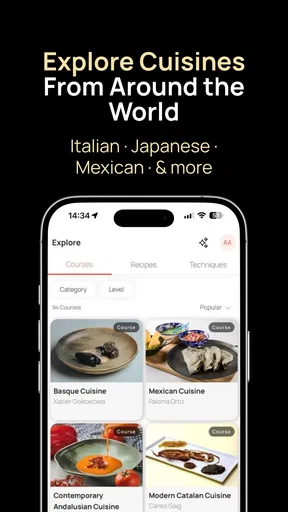
Scoolinary: Cook Online is a comprehensive culinary app designed to enhance your cooking skills. It offers a wide range of online cooking courses taught by professional chefs. Users can explore various cuisines, learn new techniques, and access high-quality video tutorials. It's perfect for both beginners and experienced cooks looking to expand their culinary repertoire.
Is Scoolinary: Cook Online suitable for beginners?
Yes, Scoolinary is ideal for beginners. The app offers courses that start with basic techniques and gradually advance to more complex recipes. Each course is structured to ensure a clear understanding, with step-by-step video guides and detailed instructions, making it easy for novices to follow along and improve their cooking skills.
What devices are compatible with Scoolinary: Cook Online?
Scoolinary: Cook Online is compatible with both Android and iOS devices. Users can download the app from the Google Play Store or Apple App Store. It is optimized for smartphones and tablets, ensuring a seamless experience across different screen sizes. Ensure your device meets the app's system requirements for optimal performance.
Are there any subscription fees for using Scoolinary: Cook Online?
Scoolinary offers both free and premium content. While some introductory courses are available for free, a subscription is required to access the full library of classes. The subscription model provides unlimited access to all courses, exclusive content, and new classes added regularly. Pricing details are available within the app.
How does Scoolinary: Cook Online ensure the quality of its courses?
Scoolinary collaborates with renowned chefs and culinary experts to deliver high-quality content. Each course is professionally produced, featuring HD video tutorials and clear instructions. The app frequently updates its content based on user feedback and trends in the culinary world, ensuring a top-notch learning experience.


